I know what you’re thinking “Thoughtful Collector is writing about a wooden pencil?”. It’s a fair question – and one I expected. We love beautifully made things that are difficult to make, and when it has a pedigree of collectibility to it, they become even more compelling. Consider this: Blackwing pencils have sold between $40 and over $200 per pencil on the secondary market. At the time of this writing, a set of 12 is currently on sale for $1,099.
Does that pique your interest? I thought it might.
If this is your first time hearing of Blackwing, I am delighted to introduce you. These are more than the wooden pencils you remember, and you’ll agree by the end of this piece.
In our hyper-paced, digitized world, this company happily claims to be “in the business of slowing down” – something we should all do now and then – and their product is an excellent place to start. They’re not expecting everyone to ditch their mobile devices, just that we find a balance between digital and analog engagement. Perhaps most refreshing is that Blackwings are made with the sort of detail this community can appreciate, accompanied by a cult following with a fascinating little history. Let’s unpack it.
Introduced in the 1930s by the Eberhard Faber Pencil Company, Blackwing pencils quickly gained a reputation among writers, artists, and musicians for their exceptional quality and unique features.
The original Blackwing pencil was known for its distinctive design, featuring a sleek black barrel and a replaceable eraser attached to an extendable metal ferrule. The ferrule is the small metal band that connects the eraser to the pencil’s wooden body. It is typically crimped to hold the eraser securely in place. The smooth graphite core offered a perfect balance between darkness and smoothness (more on this later), making it beloved by writers and illustrators alike.
Throughout the mid-20th century, Blackwing pencils became synonymous with creative excellence, favored by renowned figures such as John Steinbeck – who wrote the “Grapes of Wrath” with a Blackwing, Truman Capote, Stephen Sondheim, and Leonard Bernstein.
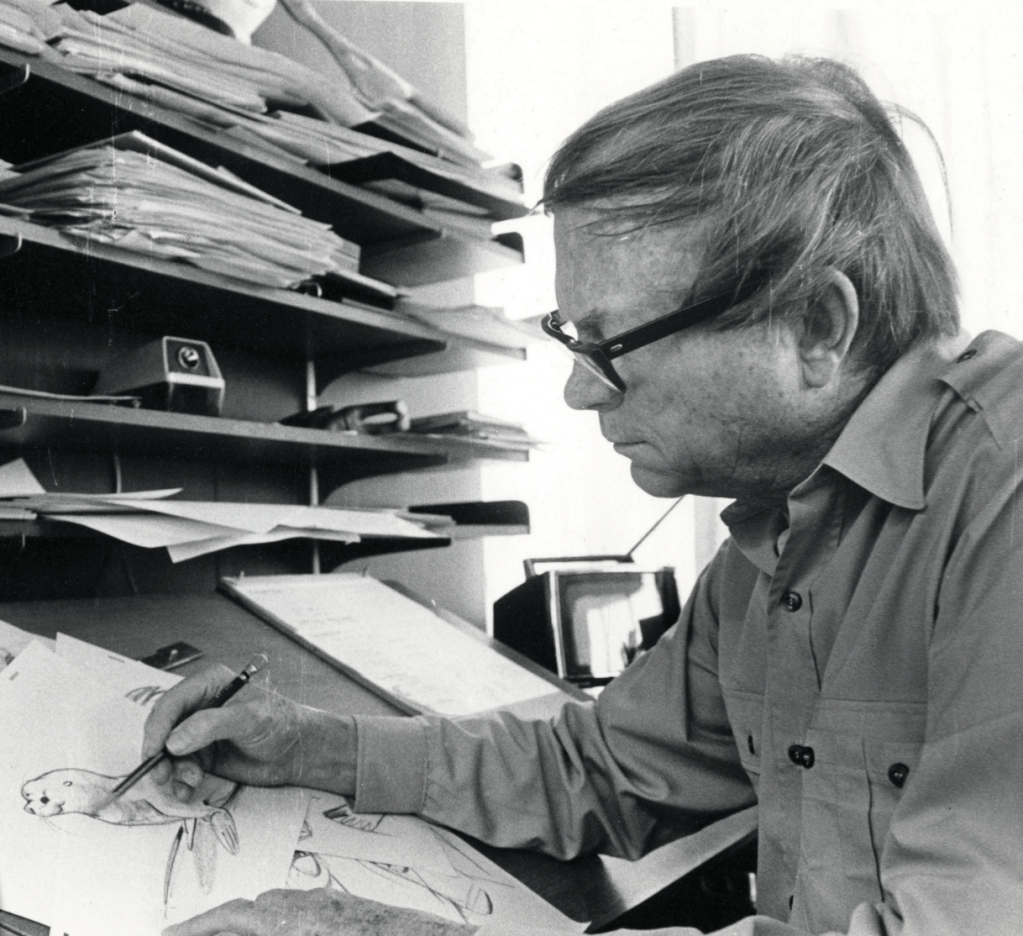
My all-time favorite user on the long list of famous names is Looney Tunes animator Chuck Jones. He delivers the richest quote in a 1994 interview with Charlie Rose when he was asked about the “pen” he was using. Jones politely corrected him and added while showing his Blackwing to Charlie Rose: “A pen is full of ink. This pencil is full of ideas”. A witty, yet romantic response.
It’s been cast in a slew of movies and TV shows including Mad Men, Bewitched, All the President’s Men, and Revenge of the Nerds. And it’s clearly visible with Richard Dreyfuss in the 1975 movie Jaws. The list goes on to include many more legendary Grammy, Emmy, Pulitzer and Academy Award winners who chose to work with a Blackwing 602 – perhaps the most famous wooden pencil in history.
An iconic design coupled with superior performance (yes, we’re talking about a non-mechanical pencil!) became the sidekick for generations of creatives. And then, one day, it disappeared.
So where did it go?
Despite its popularity, the original Blackwing pencil was discontinued in the 1990s for one critical reason – the machine to fabricate the clips for the eraser ferrule had broken. The repair was too expensive, and production never resumed, so the inevitable happened. By 1998, the remaining stock was depleted, sparking a frenzy among pencil enthusiasts. Resale prices soared. Loyal fans who once paid 50 cents were now paying $40 per pencil to private sellers on eBay.
They didn’t know that a savior would arrive a dozen years later.
Resurrection
In 2010, Grant Christensen raised Blackwing from the grave by reimagining the classic pencil while preserving its timeless appeal. They smartly retained the design and premium graphite core that originally seduced the most gifted artists and writers in its heyday.
Since its relaunch, Blackwing pencils have continued to inspire luminaries worldwide, and they remain a symbol of creativity and craftsmanship, inspiring new generations to pursue their artistic passions.
The finer points of their manufacturing
As I mentioned, we love beautiful products that are difficult to make, and these pencils are no exception. As Blackwing President Grant Christensen articulated in an interview with Wall Street Journal, “There’s a reason that nobody brought it back sooner.” Purchasing the name “Blackwing” for $300 was the launching point but with no blueprint, Palomino needed to recreate it from scratch. To begin with, they decided to replicate the era that its cult popularity bloomed – the 1940s, 50s, and 60s. Now came the hard part – reverse engineering it.

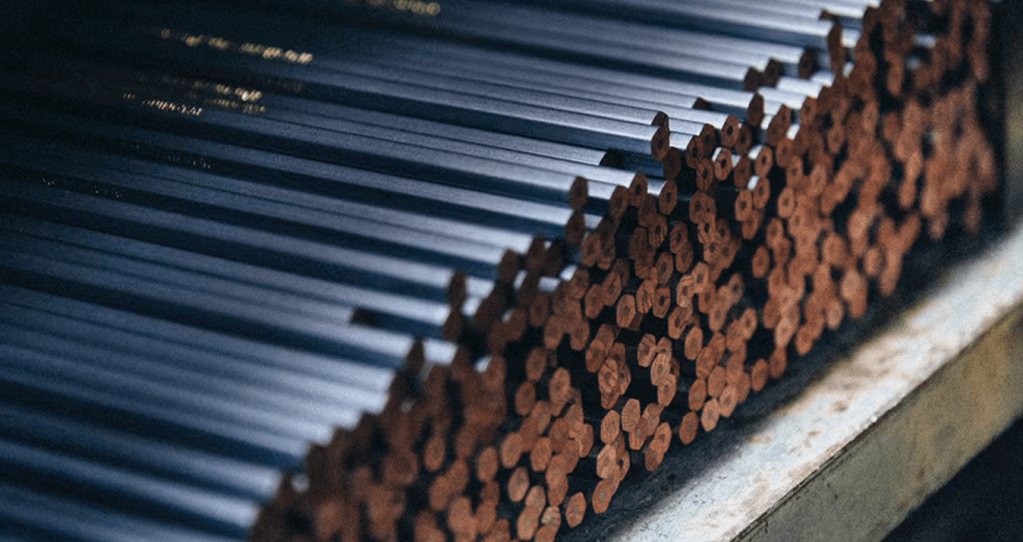
The originals were hailed as very smooth writers, which fittingly lived up to their slogan of “Half The Pressure; Twice The Speed,” so the team knew that achieving the right graphite recipe was paramount. To do this, they tested bundles of Japanese graphite for smoothness, darkness, lightness, point retention, erasability, and smudginess. A proprietary blend of graphite, wax, and clay are at its core. Blackwing was the first pencil produced with wax, the key to its signature smoothness, and the inspiration for its “twice the speed” claim. Only a few people are trusted guardians of this secret, and while we can know the ingredients, the formula remains a mystery.
Now comes the exterior.
The barrel of the Blackwing is California Incense-cedar, the standard wood for a high-quality pencil. Its premium nature is in its softness and how tight the wood grain is. According to a pencil historian, how cleanly a pencil sharpens is a significant indicator of a pencil’s quality.
The cedar undergoes most of its manufacturing in Japan, where it’s shipped for production. Once the graphite core is snugly encased in its precisely shaped cedar jacket, it’s all about achieving the perfect fit and flawless finish. Each pencil receives 11 to 12 layers of lacquer, which is predominantly noticeable in the 602 model’s signature smoky grey exterior. For comparison, a typical wooden pencil may receive only 2 to 3 layers!
Ferrule delivers form and function
The most distinctive feature of the Blackwing pencil is its ferrule and flat eraser, designed to prevent the pencil from rolling off desks – a common irritant for animators during the 40s, 50s, and 60s. That makes its shape a unique expression of form following function that is applied – or “tipped” – creating a sleek transition between the ferrule and the pencil barrel. They seamlessly flow together. These are the nuances that require additional time and steps, and are essential to its character. That’s a beautiful thing.
Musician Stephen Sondheim – responsible for the lyrics to West Side Story – sums up our story rather well when he was asked by the Academy of Achievement in a 2005 interview whether he used any special kind of paper or pencils, Stephen replied: “I use Blackwing pencils. Blackwings. They don’t make ’em any more, and luckily, I bought a lot of boxes of ’em. They’re very soft lead. They’re not round, so they don’t fall off the table, and they have removable erasers, which unfortunately dry out.”
My closing thought
Throughout my life, pencils have reminded me to always think creatively – even before I learned how Chuck Jones’ sentiment toward his wooden Blackwing. Perhaps it’s because I first used a wooden pencil as a young boy to draw for hours at a time, and one made of a premium nature is even more inspiring.
I appreciate Blackwing’s determination to press forward despite some criticism over pricing ($30 for a box of 12; $2.50 per pencil). They are more interested in creating a premium product for the niche audience who appreciate it, rather than for the masses, and I admire that very much. When true aficionados purchase your product out of genuine admiration, it’s deeply fulfilling—I’ve experienced this firsthand.
Thoughtful Collector is proud to raise awareness of premium products within our community. To learn more about Blackwing products and how a portion of each purchase supports music and art programs in public schools – you can visit their website here.
 The Thoughtful Collector