I’ve been fascinated with supercars long before professionally joining the McLaren manufacturer, and to better understand the genesis and evolution of this class type, one must look at the Lamborghini Miura. As a lover of this model since I was young, it was a treat to revisit it. The very thought that this car represents a clear demarcation point of arrival of the supercar – and the way it came about – is extraordinary. A classic story that never gets old and we are delighted to feature a gorgeous model here that is available for sale from a world class expert seller. Thoughtful Collector is here to accept your inquiries – but first, here’s the tale.
This little story of the world’s first supercar – which shaped future generations of supercars to follow – is by no means meant to supplant the work of Joe Sackey’s Lamborghini Miura Bible. Sackey’s work is still the most definitive volume ever authored on the famous Italian supercar (as far as we’re aware). Looking closer at the Miura this time around plunged me further under its spell. It was conceived from a bold vision to deliver racing-like speed and power on the open road. It would deliver a sensation never before felt by a driver (or passenger) until this car emerged from the Lamborghini workshop with the swagger of being the fastest production road car at that time. It was a game changer in every respect and widely regarded as one of the most iconic and influential sports cars in automotive history, and it came dangerously close to being the supercar that never was.
The world’s first supercar that almost never was
Three top engineers at Lamborghini – Gian Paolo Dallara, Paolo Stanzani, and Bob Wallace (head mechanic and test driver) – headed a seven-person team in developing a prototype codenamed the P400. Their mission was to bring to life a machine with a racing personality meant for the street. Unfortunately, their concept cut against Ferruccio Lamborghini’s desire to build powerful yet sedate grand tourers with front-mounted engines. He had no desire to build race-inspired cars like the ones coming out of Ferrari’s workshop. So, right out of the gate the P400 seemed dead on arrival.

These dedicated men wouldn’t give up, and instead, began working tirelessly after hours to build their car in secret. I can get lost dwelling on the mental image of this team going rogue and working off the books this way – this would never happen today, so for me, this is the most fascinating part of this entire creation story. Ferruccio’s lack of support must have felt like a weight around the neck of the spirited campaign – weighing heavier anytime they had a setback. Extra hours and effort to resolve unforeseen challenges – which I’m sure they faced a fair amount of – could have pushed them to the point of walking away altogether. Wouldn’t that have been tragic? My experience of working for two preeminent manufacturers has taught me the development process is not always friendly. Despite various hurdles likely taking their toll, they wanted to build their dream machine and they weren’t about to stop now.

Part of their strategy was to also convince the founder that this car would neither be too expensive nor distract from the company’s primary focus. It was a fine compromise, I’d say, and one that eventually worked. Ferruccio came around, but only somewhat. To him, this would serve as a great marketing tool, a halo product showcasing the manufacturer’s strengths – but not as a serious production model. Halo cars are a part of the brand-building strategy. These models are sparkling with loads of advanced voodoo and appear to have sprung from a science-fiction movie. They seduce you and then break your heart the moment you learn it’s not available. But you can own a piece of that halo car when some of that sci-fi magic flows into the following production models.
In the case of the Miura engineers, they had greater ambitions than building a halo car, but Ferruccio’s slowly accelerating support was an encouraging sign for them to press on.
Marcello Gandini
The first time anyone outside the workshop laid their eyes on the incomplete prototype was at the Turin Salon in 1965. A rolling chassis bearing its icy codename “P400” would be the only representation of the future. Surprisingly, this teaser was enough to pique showgoers’ interest into placing orders. Despite having no bodywork, the chassis and four wheels (bolted on to make the chassis mobile, not necessarily to increase aesthetic appeal) had been enough to stir the appetite!

Now, the body design needed the same radicalized Italian flare to match the low-slung chassis beneath. Who would be the visionary to lead the way? Marcello Gandini from Carrozzeria Bertone. A complete unknown.
Marcello Gandini was born on August 26, 1938, in Turin, Italy; his career in automotive design began in the mid-1960s when he joined Carrozzeria Bertone. Nuccio must have seen great potential in the fresh faced youngster when he gave him his first major project – the Lamborghini Miura – at 22 years of age! I wish I could’ve seen the utterly unknown designer’s face in his initial briefing on the project – what a thrill this must have been for him.
Gandini believed that the most exciting of forms always followed function. In studying the dynamic capability of the Miura, the designer probably found its romantically nasty attitude a delicious starting point. How far into his process did he visualize the final design? What ideas, if any, were left on the cutting room floor? And how about that sharp, punchy name – Miura? (More on Bandini’s career at the very end of the piece.)
Fusion of Italian design and bullfighting
Lora del Rio near Seville in Spain is where the Miura Ranch produces ferocious and large bulls dating back to 1842. Juan Miura, a significant figure in the history of bullfighting, established it with the goal of breeding bulls that were not only strong and aggressive but also exhibited a certain nobility and presence, which are highly prized traits in the bullfighting culture. This distinct breed became known for its unpredictable nature and formidable challenge to matadors.


Since first appearing in the arena in 1849, they have claimed the lives of seven matadors through the years – more than any other bloodline! The last fatality was in 1947. Because of this reputation, if a Matador courageously defeated one of these fearsome beasts in the arena, they would gain significant prestige in the bullfighting world.
Since 1963, Ferruccio – an avid fan of bullfighting – has used the charging bull to represent Automobili Lamborghini S.p.A. He admired the power, elegance, and aggression of bulls, qualities he wanted his cars to embody. Now, Gandini would channel the ferocious legacy of the Miura bulls into the vehicle that bears their name.

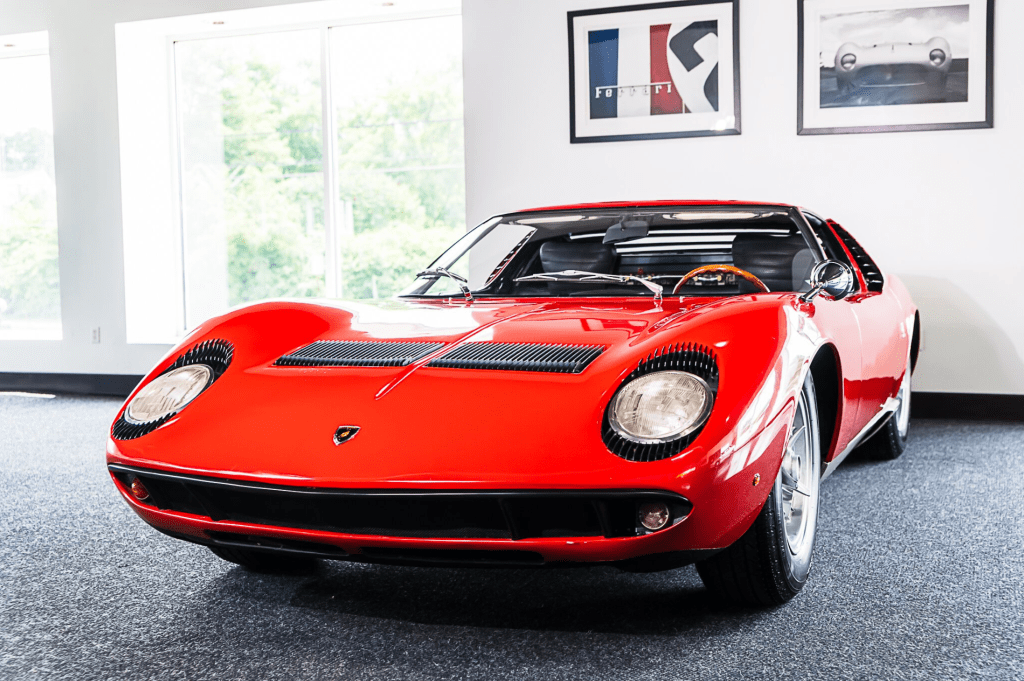
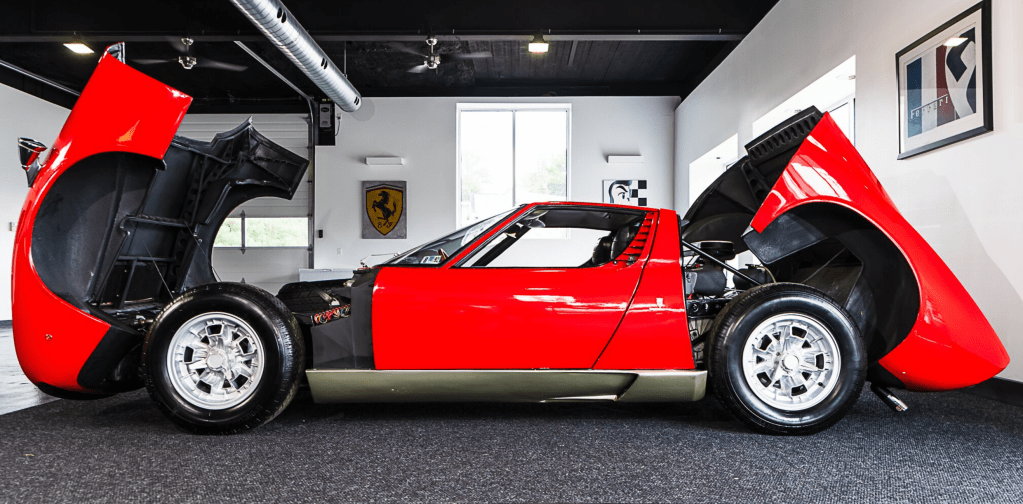
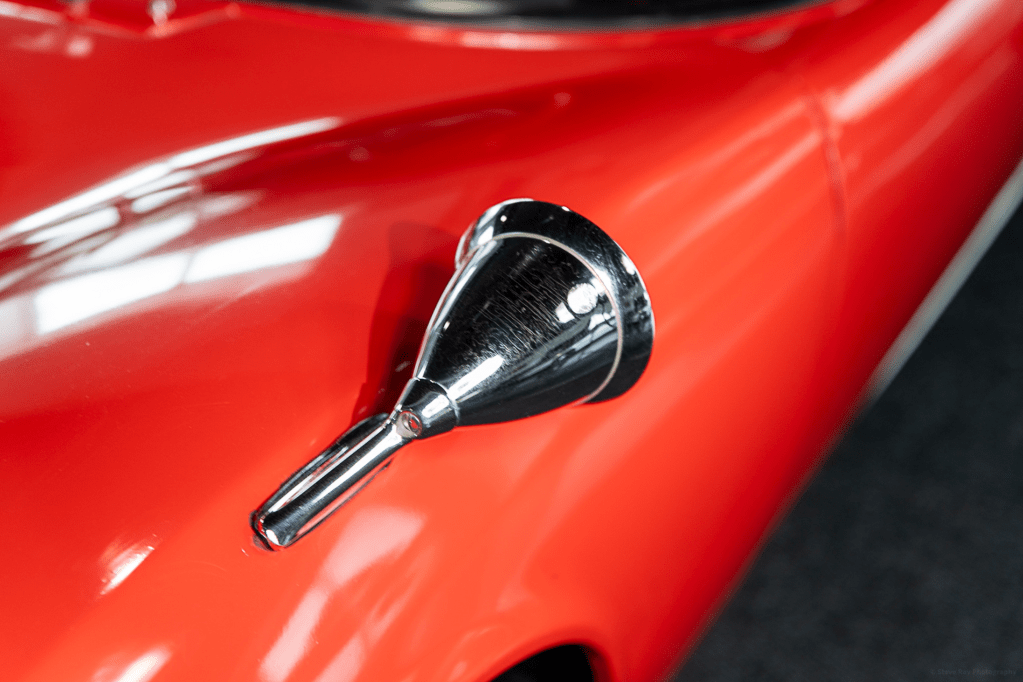
Seductive Italian style and muscular definition working in harmony. The Miura’s aggressively low-slung design, softened by headlight surrounds, intended to resemble a woman’s eyelashes and the car’s gracious curves, provides a voluptuous and sexy impression. The cherry on top is a bold detail in keeping with the bullish theme, shaping the doors to imitate bullhorns when they’re fully opened. Truly a grande bellezza from front to back.
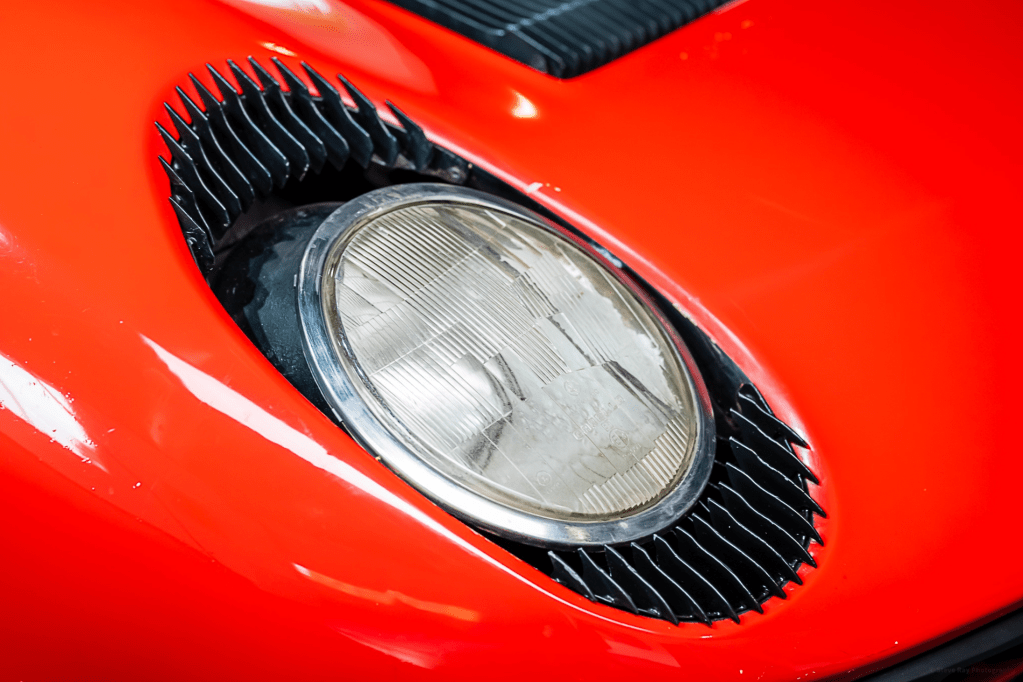
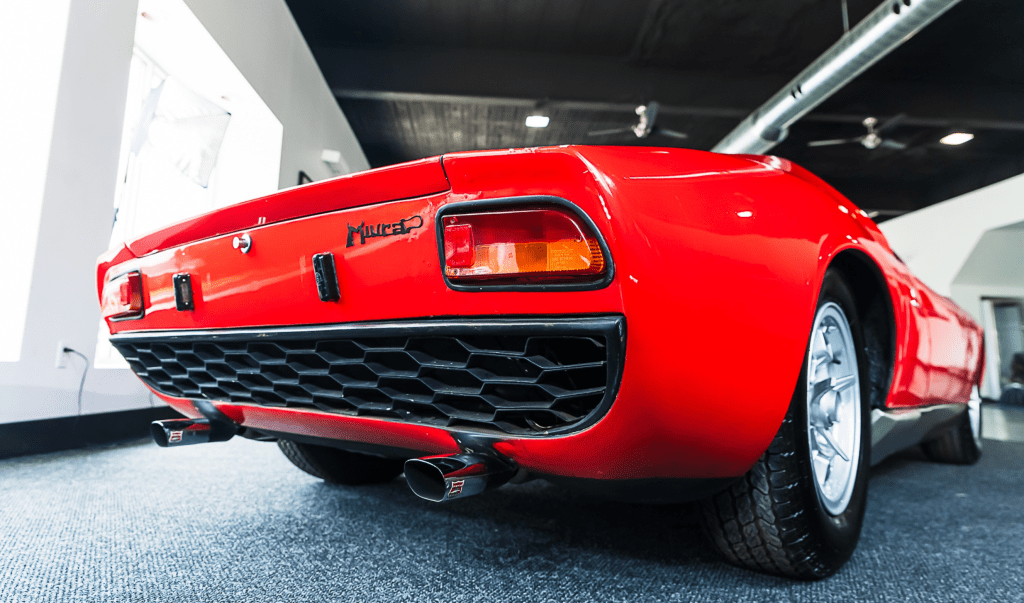
The Miura’s striking presence – stemming from this unique combination of brute aggression and feminine beauty – made it a jaw dropper at the Geneva Motorshow in 1966. The first global unveiling of its design’s sleek flowing lines struck the audiences’ hearts. It was a technological marvel and a work of art, setting new standards for performance and design, catapulting Lamborghini’s reputation, and positioning the company as a leader in supercars. Finally, the engineers would fully realize their dream as production of the Miura would begin the following year.
The driving experience is described as unlike any other. Driver starts the engine and it roars to life. A throaty growl fills the cockpit. Squeezing the accelerator unleashes the Miura within – fierce and untamed. Right on brand. The sculpted form slices through the air, swooping through corners with balanced handling – the benefit of the posteriore mounted engine is felt. Some are critical of its misbehavior at high speed, but one thing is certain, if you take the Miura dancing, expect a lively experience.
A few closing words
Fabio Salini, a high jewelry designer, says, “Italian style has no rules: It’s a balance between aesthetic experimentation and the expression of a soul.” Gandini mastered this balancing act. It’s one thing to imagine a work of art in its original context; it’s another to experience it in real-time. I wish to have experienced this car in the context of its day, to be floored by its extremism. It’s mellowed over the years with the steady rise of supercars pushing the limits. Regardless, the Miura will forever remain impressively eye-catching in performance and design. We, admirers, are grateful that its creators had the fortitude to see it through and shape it into existence.
Sadly, Marcello Gandini passed away in March of 2024 in Turin, Italy – two years shy of celebrating the 60th anniversary of the world’s first supercar he helped bring to life.
About the model featured in our photos
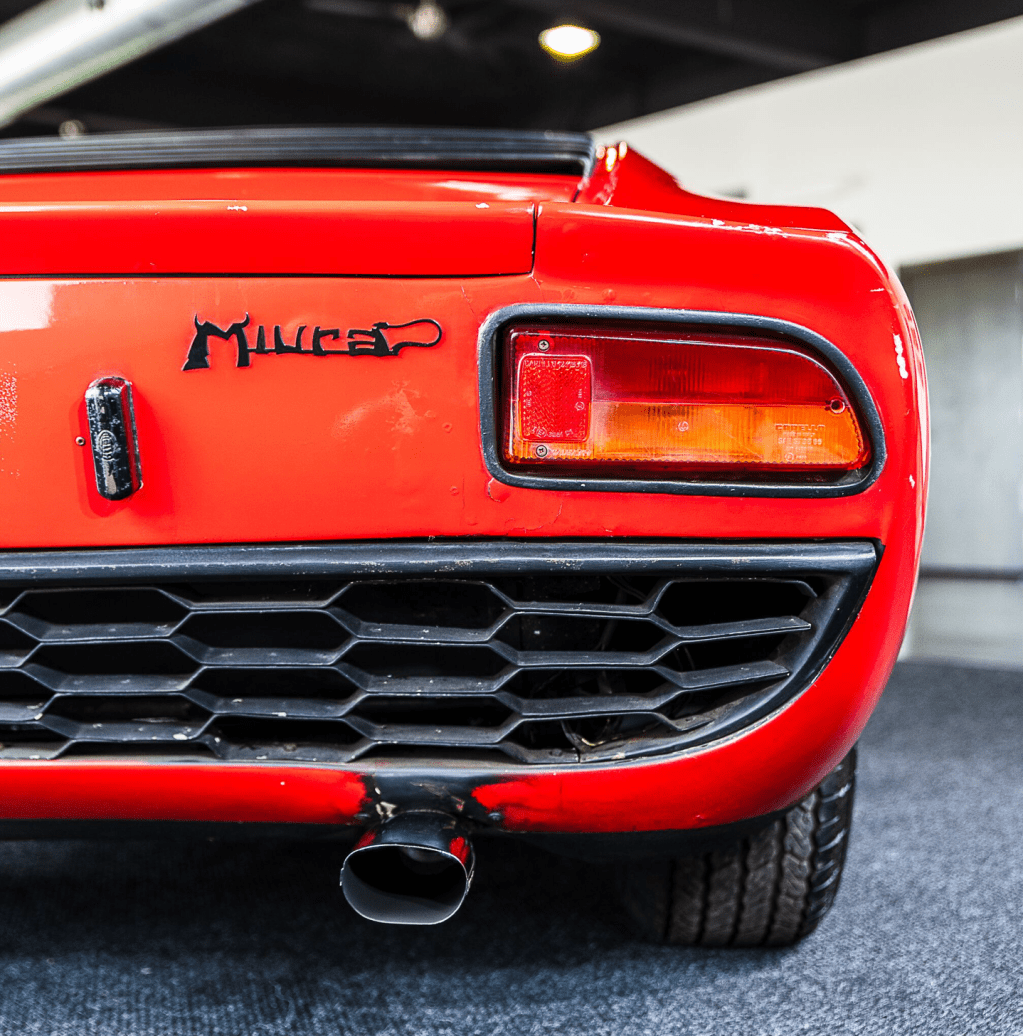
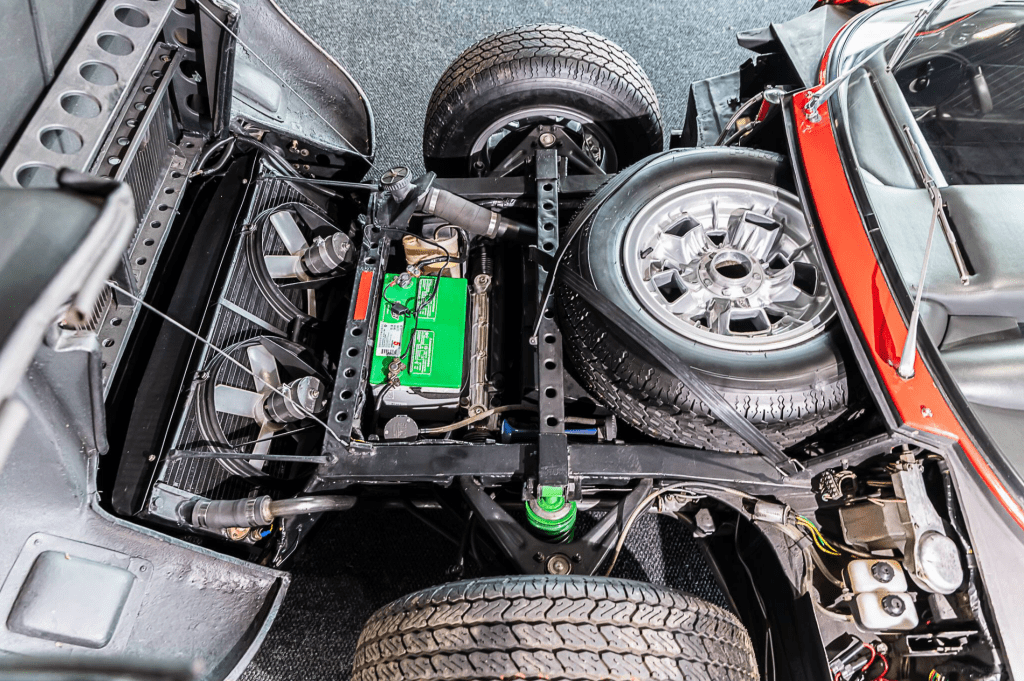
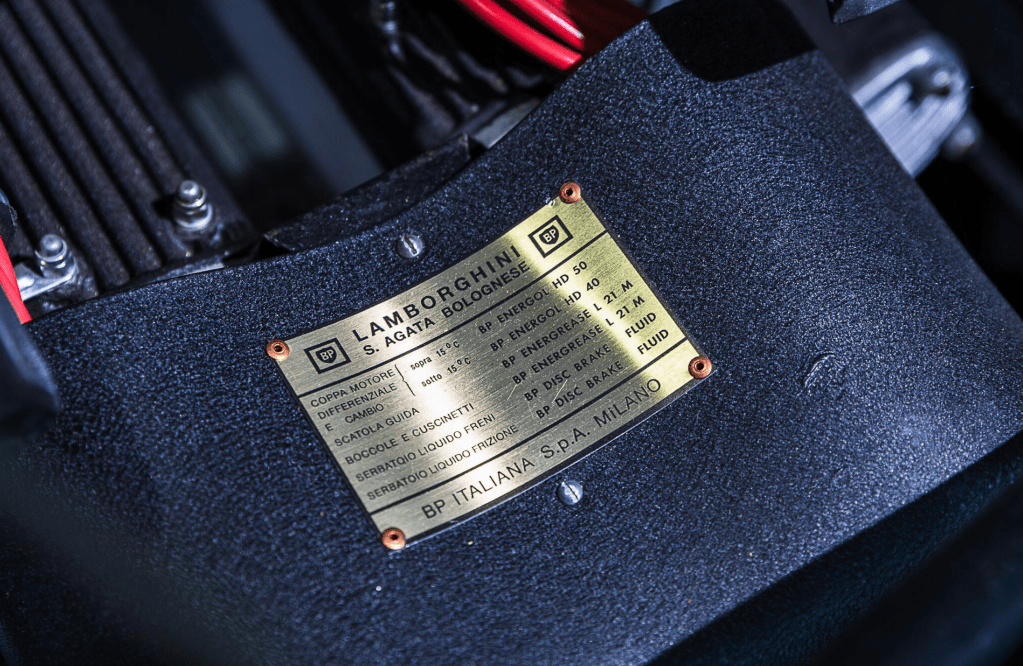
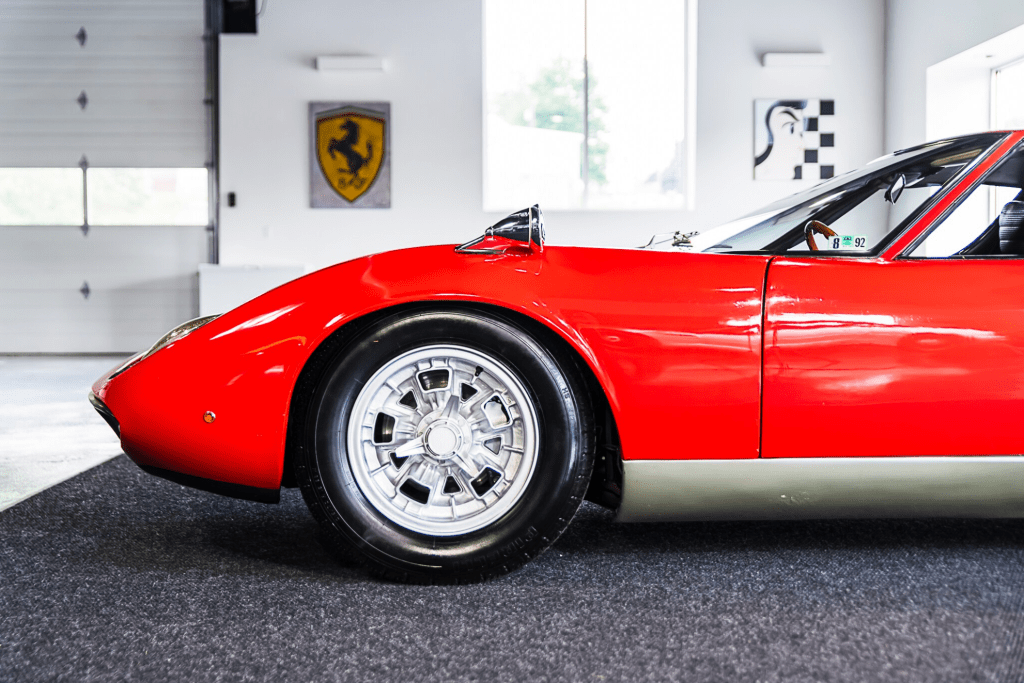
The Miura featured in the photos throughout our piece is chassis 1072, one of only 474 Miura P400s produced between 1966 and 1970. This particular model has been meticulously cared for by the same owner since 1981. It retains its original Rosso Miura color paint with silver sills and black bumpers. All four wheels have likewise been finished in original silver. A period-correct spare wheel is located under the front bonnet.
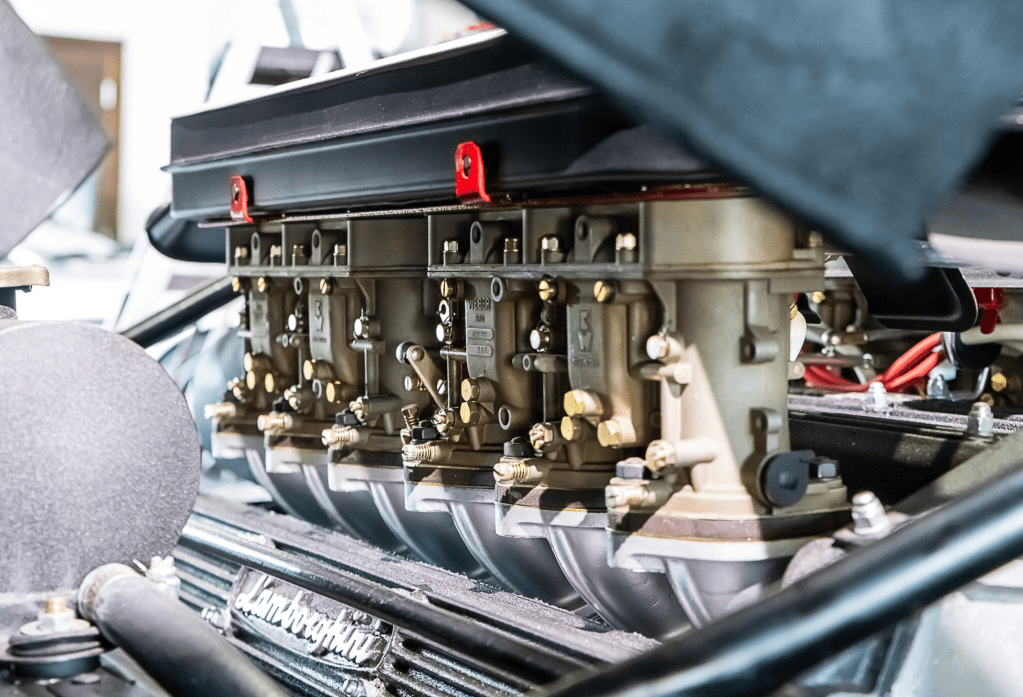
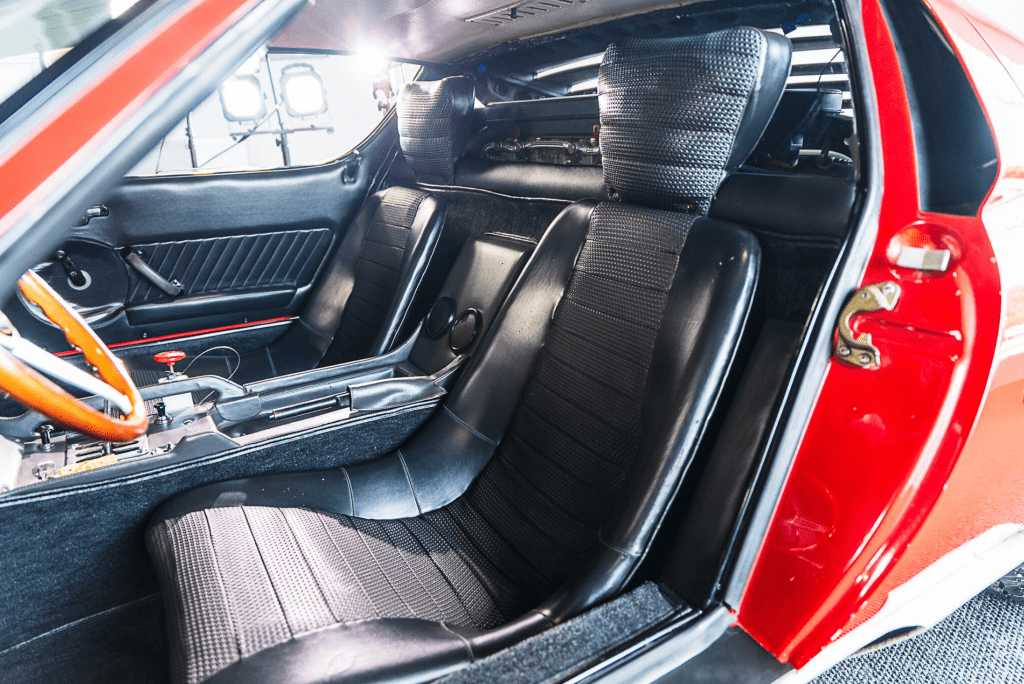
The red body contrasts nicely against the interior of its original nero leather as it was delivered. The engine bay is as clean and nicely detailed as it was upon factory delivery. The carpets have been replaced to period correct nero black. Since purchasing the car in 1981, the current owner has maintained the Miura to the highest standards. We are delighted to present this example to you in stunning form. We are very proud of our partnership with this seller as they truly make the car collecting community – and experience – a better place for everyone. Thoughtful Collector has a rich network of honest to goodness buyers and sellers of the most passionate type. If you want to learn more or are interested in purchasing this car, we invite you to inquire here.


More on Marcello Bandini’s career
Following the Miura, Gandini continued to create a series of groundbreaking designs. Notable among these were the Lamborghini Countach, introduced in 1971, with its sharp, angular lines and scissor doors, and the Lancia Stratos, a rally car famous for its performance and distinctive wedge shape.
In addition to Lamborghini and Lancia, Gandini designed cars for other manufacturers, including the Alfa Romeo Montreal, Maserati Khamsin, and BMW 5 Series (E12). His work is still renowned by the cognoscenti for bold, innovative designs that often pushed the boundaries of conventional automotive styling.
After leaving Bertone in 1980, Gandini worked as an independent designer, contributing to various projects, including the Renault 5 Turbo and the Bugatti EB110. Despite his low public profile, Gandini’s influence on automotive design remains profound, and his creations continue to be celebrated for their originality and impact on car design.
 The Thoughtful Collector