
If you’re like me, your eye wanders from wrist to wrist in a crowded room. It’s (sort of) typical behavior for us watch nuts. For me, it’s also a habit formed by years in the industry, where what’s strapped on people’s wrists is an early read on which way the market is moving.
Working on the manufacturing side of the luxury watch industry, I’ve had a front-row seat to one of the biggest shifts I’ve witnessed, in both retailer orders and customer demand. I remember when sport watches were only beginning to heat up. Now they’re everywhere. They dominate the crowded rooms of dressy affairs – an arena that was once the stronghold of svelte, formal timekeepers. Along the way, the classic dress watch slipped quietly out of the conversation, to the point where many newer collectors don’t consider a leather-strap watch at all.
Let me be clear: everyone should buy and wear what they love. Watches are meant to be fun. But lately, something has changed. Dress watches are turning up on the wrists of younger collectors, near the top of secondary-market sales charts, and in the lineups of brands better known for chronographs and divers.
Look closely at those wrists, though, and a pattern emerges. It’s a Tank. A Santos. So far, the revival has largely worn one name. Which raises a question worth asking: if Cartier has won the comeback, can the classic round dress watch follow?
How the Sport Watch Won
There are several reasons the sport watch outgrew every other category, but the one owners echoed back to me most often was versatility. A sport watch can be worn for play during the day and still look sharp at night. As an owner of sport watches myself, I agree. I’ve dressed mine up and down – and you know what? I’ve gotten away with it. I say “gotten away with it” because I still believe a sport watch is too casual for every setting. Yet that’s exactly how many people now wear them.
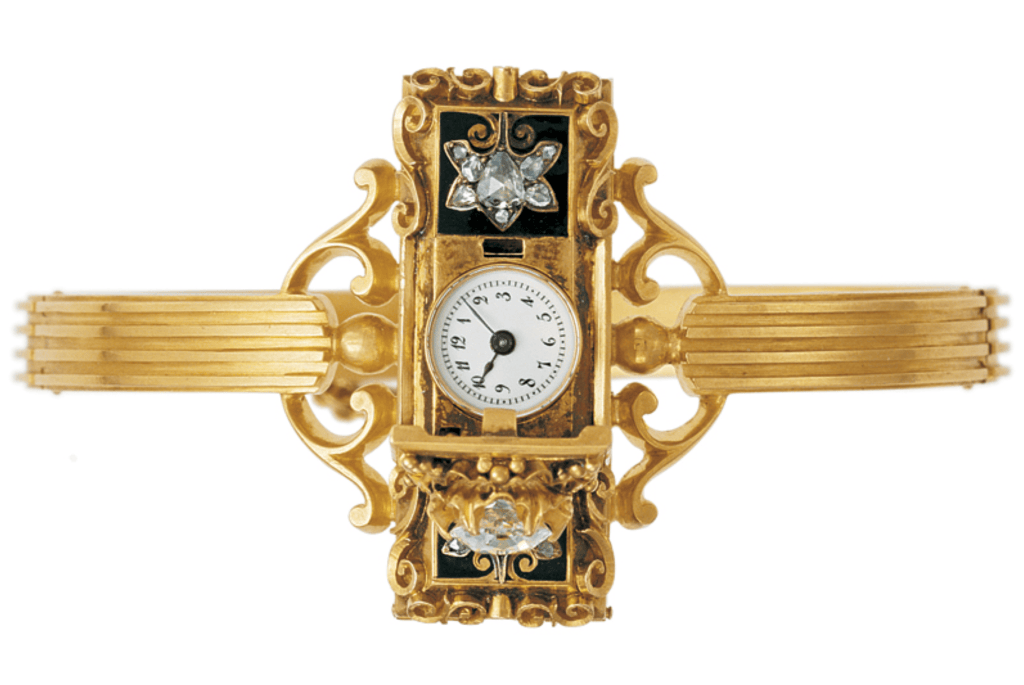
Social media amplified the effect. The algorithm favors instant recognition, and sport watches thrive on it: a bezel, a bracelet, a dial color you can identify in a split second. A great dress watch, by contrast, reveals itself at arm’s length – the curve of a lug, the texture of an opaline dial, the thinness of a case in profile. It rewards attention, which is precisely what a scrolling feed doesn’t give.
Three Shapes That Defined the Dress Watch
It’s worth remembering that the dress watch, as we refer to it today, wasn’t always considered dressy. The wristwatch earned its place on the battlefields of World War I, where officers found a glance at the wrist far quicker than reaching for a pocket watch. Veterans kept wearing them back home, and the wristwatch soon pushed the pocket watch aside. Only as society began dressing more casually did those classic proportions come to feel formal.
Three designs from that era still define the category:
- Cartier Tank, circa 1917. Inspired by the Renault tanks of the First World War, its rectangular profile is now more synonymous with the watch than with the weapon that inspired it.
- Jaeger-LeCoultre Reverso, 1931. A sport watch decades before the Royal Oak and Nautilus, its reversible case was designed to protect the crystal during polo matches. Today it’s prized for its classic elegance.
- Patek Philippe Calatrava, 1932. Guided by Bauhaus principles, the Ref. 96 was smooth, sleek and stripped of ornament. Its round case echoed the movement inside, its lugs were integrated into the case, and its clean dial displayed the time with no distractions. It wasn’t the first round wristwatch – not even Patek Philippe’s first – but it became the blueprint for the dress watch, replicated by Patek and countless others ever since.
Two of those three are shaped. One is round. That distinction matters more today than ever.
Credit Where It’s Due
Let’s give Cartier its victory, because it has earned it. According to the Global Wrist Watch Report by Watchfinder & Co., dress watch sales grew on the secondary market, with the Santos and Tank tied as bestsellers, followed by the Ballon Bleu. At auction, the appetite reaches well beyond the entry level: in May, a 1990 Cartier London Crash sold for $2.03 million at Christie’s Geneva.
Why Cartier? Shape. A Tank is recognizable from across a room; a Crash is recognizable from across the internet. Cartier’s designs read as objects first and watches second, crossing easily into fashion and celebrity culture. And because Cartier never pretended to make tool watches, it was already standing where collectors were headed when tastes swung back toward elegance. Cartier doesn’t own the shaped case, of course – Patek Philippe’s Golden Ellipse, born in 1968 and drawn from the golden ratio, is proof of that. But no house has turned the shaped dress watch into instant recognition quite like Cartier.
The Round Dress Watch Is Still Waiting
The round, time-only dress watch hasn’t enjoyed the same spotlight. That includes the Calatrava and the watches that share its philosophy: A. Lange & Söhne’s Saxonia, Vacheron Constantin’s Patrimony, Jaeger-LeCoultre’s Master Ultra Thin. Their virtues are cumulative rather than immediate – proportion, finishing, the way a thin case slides beneath a shirt cuff. Those are hard qualities to sell in a scroll. So when we say dress watches are back, we may really mean something narrower: dress watches that photograph well are back.
I shared a close look at what’s inside the Ref. 6119 in a piece I published about Patek Philippe’s unending pursuit of accuracy. Here, my interest is less in a specific movement than in the idea the watch represents.
When I joined Patek Philippe, I got a proper education in the dress watch – the kind you don’t find in a brochure, and the kind you could only learn from the house that created the archetype. I learned why the Maison’s dress watches never seem to age, and it comes down to a few principles at their very core. Consider this your crash course:
- Nowhere to hide. When the hour markers are a dial’s only decoration, every imperfection is exposed. There’s no clutter to provide cover.
- Proportion is everything. Visual balance depends on getting the relationships between case, dial and lugs exactly right.
- The case takes center stage. With nothing else competing for attention, the bezel and the finishing of the case become defining features.
- Depth in the details. Hand-applied hour markers, hands, and even the framing of a date window give a simple dial its dimension.
The Calatrava family is built entirely on these principles. For the Stern family, it represents the ideal balance between beauty and function. Its influence is hard to overstate. Look closely at almost any classic round dress watch, and you’ll find a little of the Calatrava in it. And therein lies the irony. The very influence that made the Calatrava the archetype also makes it harder to recognize from across the room.
Signs of Life
And yet, I’ve seen reasons for hope. I was recently at a wedding – an outdoor affair, no less – and spotted several formal watches coolly peeking out from beneath shirt cuffs. It felt so right. A small group of connoisseurs had left their red-hot sport watches at home for the day, choosing formality over fashion. There were still plenty of sporty pieces in the crowd, with their bulkier cases and chunkier bezels, but the formal models were refreshing. I’ll admit I wasn’t as hopeful before that day.
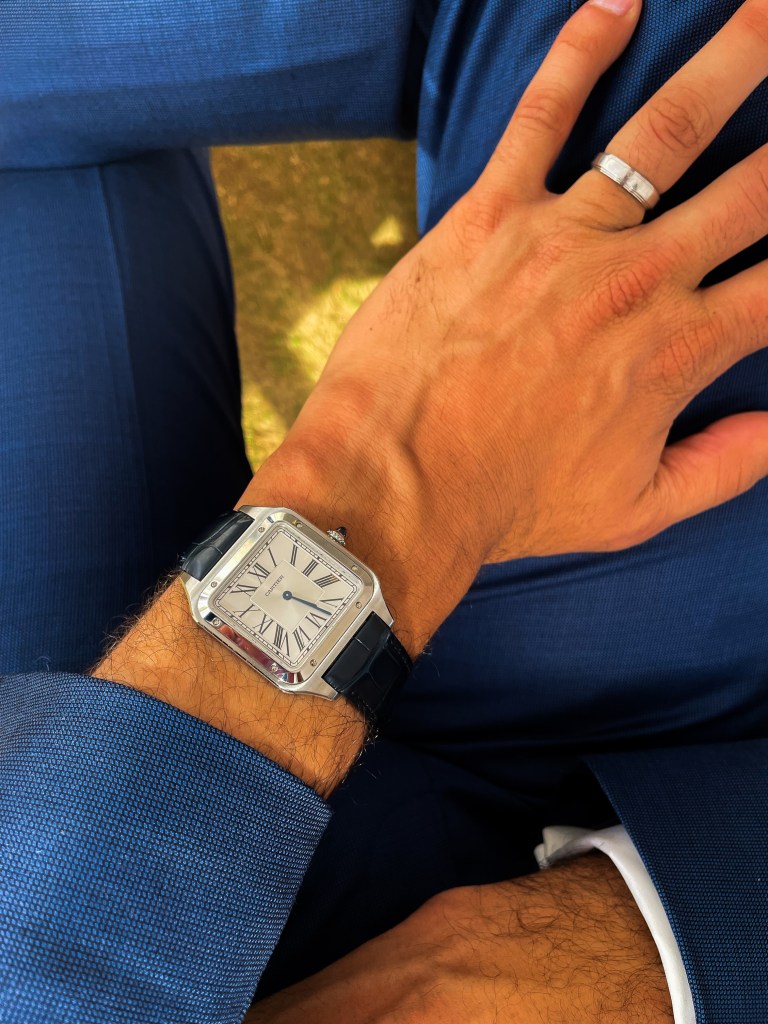
The data suggests that wedding wasn’t a fluke. According to Chrono24 and Fratello’s market report, the share of dress watches among Gen Z purchases has climbed 44% since 2018, and dress watches now account for 12% of everything Gen Z buys – the highest share of any age group tracked.
Then there’s the accidental collector. Eddie Goziker of Wrist Aficionado told Robb Report that buyers priced out of sports models discovered they could buy a Calatrava at retail – and once they owned one, they saw its value and stayed. A trend built on availability fades; one built on discovery tends to stick.

The industry is paying attention too. This year’s notable dress watches include the platinum Zenith G.F.J., the centerpiece of Zenith’s 2026 dress line, alongside new pieces from Daniel Roth and Gérald Genta, as well as Vacheron Constantin’s Historiques American 1921. When the house of the El Primero builds its collection around a dress watch, it’s a signal worth noticing.
The Case for Caution
It would be easy to declare victory, but it would be premature. The Luxury Playbook’s spring market report argues that what looks like a dress-watch renaissance is really demand rotating toward smaller, slimmer, more formal profiles across every category, sport watches included. In other words, collectors may be rejecting oversized watches more than they’re embracing the dress watch.
The 1916 Company has also noted that dress watches now succeed mainly through long-running model lines, with few new entrants from mainstream brands. And strip Cartier out of the numbers, and the revival looks considerably more modest.
A Slow and Quiet Comeback
So, can the round dress watch follow Cartier through the door? I believe it can – but not in the same way. It will never have a viral moment. Its comeback will be slower and quieter, carried by collectors rather than influencers, one wrist at a time.
That may be its greatest strength. Collectors who arrive at a Calatrava, a Saxonia or a Patrimony tend to get there on their own terms – after the hype, once they’ve learned what they truly value. People who find a watch that way rarely let it go. That’s the quiet power of the principles I learned at Patek Philippe. When a watch has nowhere to hide and is built on perfect proportion, it doesn’t need trends to survive. It simply waits for us to notice it again.
The sport watch genie isn’t going back in the bottle, nor should it. But I hope the round dress watch first reclaims its rightful place at formal events, beneath a shirt cuff, where it has always belonged. As that wedding reminded me, there’s still a crowd that reaches for the proper timepiece rather than the popular one. In a world that rewards the loudest watch in the room, the quietest one may well have the longest life.
Interested in buying or selling a pre-owned or vintage Patek Philippe? Thoughtful Collector is here to guide you. Get in touch.

